Inflatable Dinghy Australia: The Yacht-Tender Buyer's Guide (2026)
Choosing the perfect inflatable dinghy as a yacht tender in Australia requires careful consideration. This guide helps you navigate weight, stowage, fabric, and outboard options for the 2026 season.
At a glance
Choosing the perfect inflatable dinghy as a yacht tender in Australia requires careful consideration. This guide helps you navigate weight, stowage, fabric, and outboard options for the 2026 season.
- The Yacht Tender's Primary Role
- Weight and Stowage: The Critical Duo for Your Inflatable Dinghy Australia
- Swift Tenders vs. AeroCat: A Stowage Comparison
- Davit Considerations
What we'd put you in
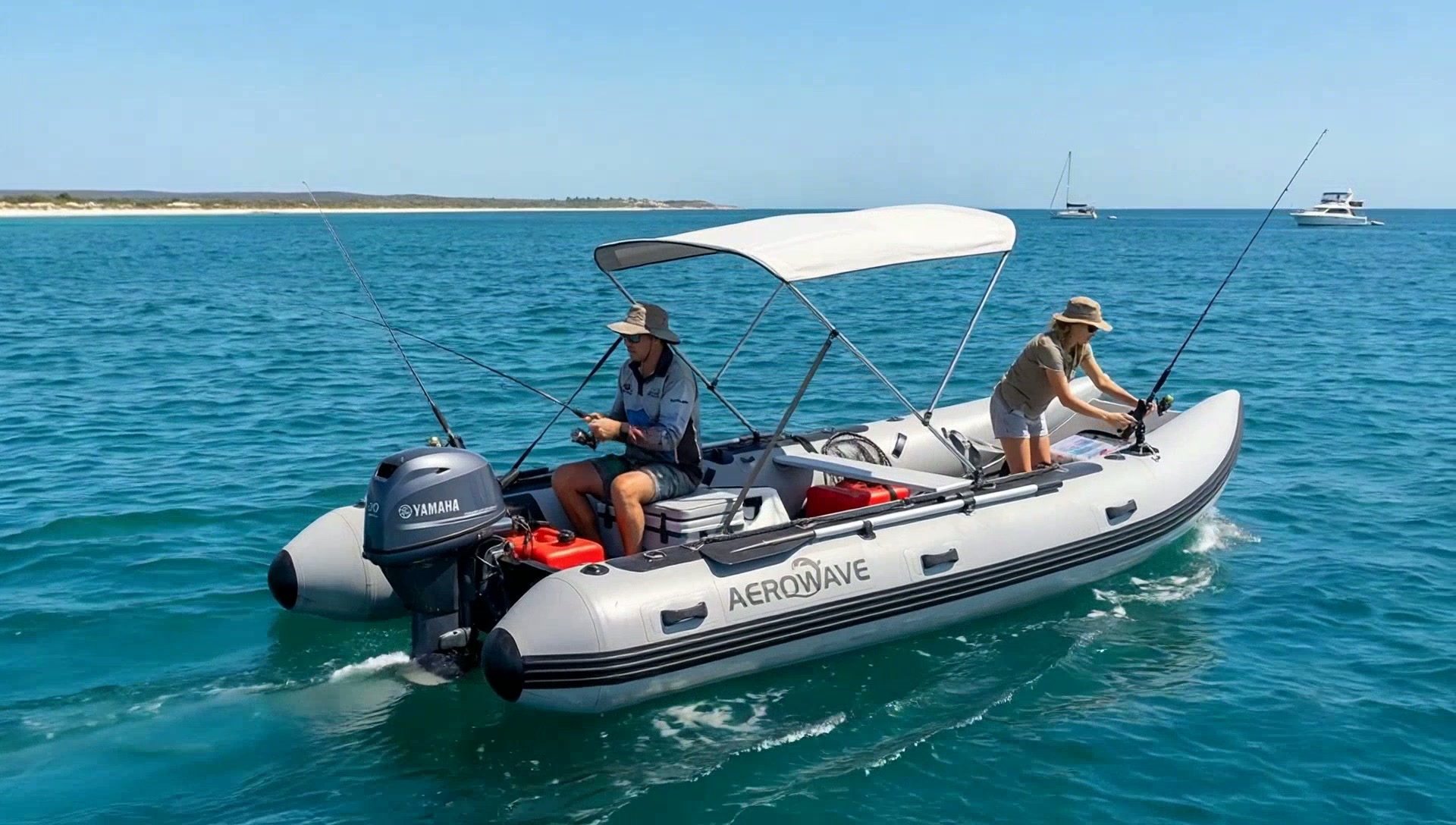
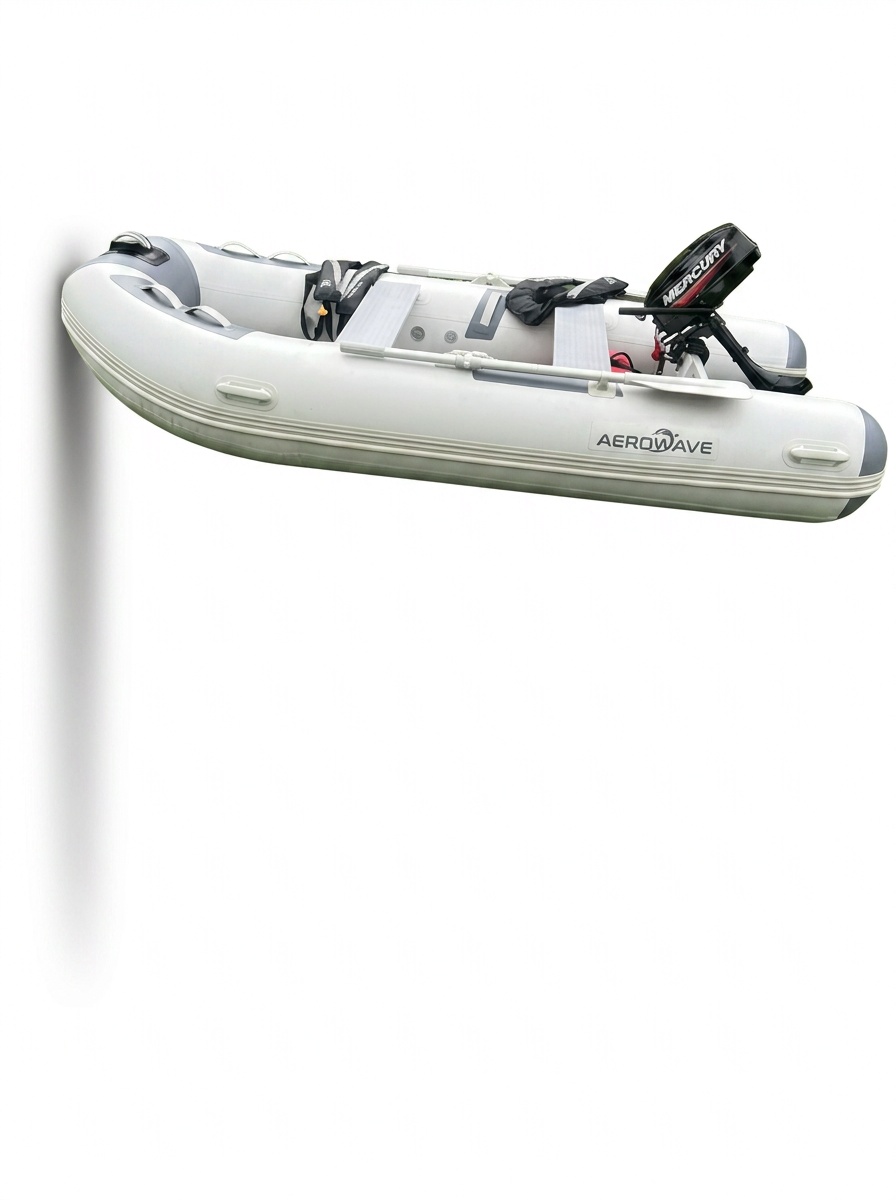
Aerowave Viper 330
Packs into a bag, inflates to a 3.3 m hard-floor boat — the tender that doesn't sulk.
US$2,774 USD
Delivered to your door, today's rate
- Free freight to United States · local taxes payable on arrival
- 7-year hull warranty
🇺🇸 Shipping to United States · landed price quoted in writing
Yes — we ship the Aerowave Viper 330 to United States. Here's the landed price.
Packs into a bag, inflates to a 3.3 m hard-floor boat — the tender that doesn't sulk.
Written for Australian readers — but the boat ships to you. We are an Australian builder and this article is written from Australian waters. That changes nothing about what you can order: the same hull, the same 7-year warranty and the same certification go out to United States every week.
Aerowave Viper 330
- Boat package (export price)
- US$3,264
- 15% tariff relief credit
- − US$490
- Express air freight to United States
- Included
- Import duty, taxes & customs clearance
- Payable on arrival
- Estimated landed, USD
- US$2,774
Indicative, converted at today's rate, before local duty and tax on arrival. Ask below and we'll put a fixed figure in writing, valid 30 days.
- 7-year hull warranty
- 1500 GSM / 1.2 mm VALMEX® Heavy Plus hull
- CE certified to ISO 6185-3 and EU Directive 2013/53/EU
- Door-to-door, tracked the whole way
Your price, delivered to your door — freight included.
We email the full PDF quote (spec, freight, finance, WavePay) to your inbox in under 60 seconds. No spam — one quote, one follow-up.
See it for yourself
Real boats. Real owners. Real people behind them.
Plenty of what you read online these days is generated. Check us out properly — the factory, the reviews and the owners are all one click away. Why we use AI, and how to check we’re real
How our boats are built
Walk the production line: thermo-welded seams, 1.2 mm VALMEX Heavy Plus hulls, over-pressure relief valves on every chamber.
See the buildGoogle Maps reviews
Real Australian owners, five stars, published on our Google Business Profile with the map — read them there, not just on our own site.
Open Google Maps reviewsOwner stories
Boats in use — offshore, on rivers, on rescue duty. Photos and words from the people who actually own them.
Read owner storiesSelecting the right inflatable dinghy for your Australian yacht tender duties is a balancing act of practicality, performance, and durability.
For many yacht owners cruising Australia's stunning coastline, an inflatable dinghy is much more than just a lifeboat; it's a vital tool for shore excursions, provisioning, exploring shallow estuaries, and even ferry duty for guests. The market for inflatable dinghy Australia is diverse, but knowing what matters most to a yacht owner can simplify your decision-making process.
The Yacht Tender's Primary Role
Unlike an inflatable boat primarily used for watersports or fishing from shore, a yacht tender has unique requirements. You'll need it to be:
- Lightweight yet robust: Easy to launch and retrieve, but tough enough for daily use and occasional bumps.
- Compact for stowage: Whether on deck, in a davit system, or deflated below deck, space is always at a premium.
- Stable and dry: Especially when ferrying passengers or supplies in a chop.
- Capable: Powered by a small outboard, it needs to get you where you're going efficiently.
Let's dive into the specifics that truly matter when choosing your next yacht tender.
Weight and Stowage: The Critical Duo for Your Inflatable Dinghy Australia
When considering an inflatable dinghy for your yacht, weight is arguably the most crucial factor after overall length. Every kilogram counts when launching, retrieving, and stowing. Traditional rigid-hull inflatables (RIBs) often boast impressive performance but their inherent weight and bulky hard hull can be a significant drawback aboard a cruising yacht.
This is where Soft Inflatable Boats (SIBs), particularly those with inflatable floors or air-deck designs, shine. They offer a fantastic compromise between performance and portability.
Swift Tenders vs. AeroCat: A Stowage Comparison
| Feature | Easy Inflatables Swift Tender 2.7m | Easy Inflatables AeroCat C330 |
|---|---|---|
| Boat Type | Monohull (Air Deck) | Catamaran (Twin Air-Tube Hulls) |
| Length Overall | 2.7 metres | 3.3 metres |
| Boat Weight | Approx. 33 kilograms | Approx. 45 kilograms |
| Fabric | 0.9mm VALMEX | 0.9mm VALMEX |
| Floor Type | High-Pressure Air Deck | High-Pressure Air Deck (Between Tubes) |
| Stowage Footprint On Deck (Deflated) | Small, rollable cylindrical bag | Larger, flatter rollable bag |
| Stability | Very good, especially with air deck | Excellent, superior inherent stability |
| Davits Recommended? | Optional, manageable by hand | Recommended for easier handling |
| Typical Outboard | Up to 5HP | 5HP - 15HP |
As you can see, a Swift Tender is incredibly light and compact, making it an excellent choice for smaller yachts where space and manual handling are paramount. You can easily deflate and roll a Swift Tender into a relatively small package to stow in a lazarette or dedicated deck bag. Its air deck provides a firm, stable platform without the added bulk of a rigid floor.
The AeroCat C330, while still very manageable, is heavier and has a slightly larger footprint due to its twin hull design. However, what you gain in stability and performance often outweighs this. Its higher payload capacity and remarkable stability make it superb for heavier loads or choppier conditions. For an AeroCat, particularly the larger models like the C360 (approx. 50kg) or AeroCat C380 (approx. 55kg), davit systems become increasingly beneficial, if not essential, for safe and easy launch and retrieval.
Davit Considerations
If your yacht is equipped with davits, your options for an inflatable dinghy Australia expand. Davits take the strain out of launching and retrieving, allowing you to opt for slightly heavier models or keep your tender inflated and ready to go. Remember to check the weight rating of your davit system. A fully provisioned tender, plus a 4-stroke outboard (a 5HP Hidea might weigh around 25kg, a 9.8HP around 38kg), can quickly add up.
For yachts without davits, or those with smaller capacity systems, a lighter SIB like the AeroCat C330 or a Swift Tender becomes a clear winner. Their ability to be rolled up and stowed below deck or on a foredeck minimises clutter and windage while underway.
Fabric and Build Quality: Durability for Australian Conditions
Australia's harsh sun and corrosive saltwater environment demand the very best in inflatable boat fabric. You'll primarily encounter two types: PVC and Hypalon (or similar synthetic rubber compounds like CSM/Orca).
The VALMEX Advantage
At Easy Inflatables, we exclusively use premium German-made VALMEX fabric for all our boats, including the Swift Tenders and AeroCat range. Why?
- Exceptional UV Resistance: VALMEX is specifically engineered to withstand prolonged exposure to intense UV radiation without degrading, cracking, or losing colour. This is crucial for Australian conditions.
- Abrasion Resistance: Our 0.9mm (and 1.2mm for the Viper series) VALMEX is extremely tough, fending off scrapes against barnacle-encrusted pilings, rocky shorelines, or deck hardware.
- Longevity: A high-quality VALMEX boat, properly cared for, can easily last 10–12 years, offering excellent return on your investment.
- Air Retention: The multi-layered construction of VALMEX ensures superior air retention, meaning less time spent topping up tubes and more time enjoying the water.
Some budget imports use thinner, lower-grade PVC that may look similar initially but will rapidly degrade under Australian sun, often showing signs of failure within a few years. When investing in an inflatable dinghy, particularly as a yacht tender you'll rely on, the fabric quality is not an area to compromise.
Seams and Construction
Beyond the fabric itself, look for heat-welded seams rather than glued seams. Heat welding creates a molecular bond that is far stronger and more durable than adhesive, especially in high-stress areas and hot climates. All Easy Inflatables boats feature advanced heat-welded construction.
Outboard Fit: Powering Your Inflatable Dinghy Australia
Selecting the right outboard for your yacht tender is an art form. You want enough power to get on a plane with a reasonable load, but not so much that it's heavy to lift, difficult to store, or overly thirsty for fuel.
Hidea 4-Stroke Outboards: The Ideal Match
We typically recommend Hidea 4-stroke outboards for our tenders. They offer an excellent balance of reliability, fuel efficiency, and quiet operation. For most yacht tender duties, particularly with a catamaran hull like the AeroCat (which is inherently more efficient than a monohull), you won't need massive horsepower.
- For Swift Tenders: A 3.5HP to 5HP Hidea is generally sufficient. These engines are lightweight and easy to handle.
- For AeroCat C330/C360: A 5HP to 9.8HP Hidea will provide excellent performance, often getting the boat onto a plane with two people. The C330 can plane easily with a 5HP, while the C360 and C380 will benefit from a 9.8HP or 15HP if you carry heavier loads or desire more speed.
- For WaveRunner 380: This monohull tender can take up to a 20HP outboard, but for typical tender use, a 9.8HP or 15HP would be a sensible and powerful choice.
Consider the weight of the outboard itself, as this adds significantly to the overall weight you'll be lifting. A 5HP Hidea weighs around 25kg, while a 9.8HP is closer to 38kg. If you're manually lifting the engine on and off the transom, lighter is almost always better.
Fuel and Servicing
4-stroke outboards are generally more fuel-efficient and quieter than older 2-stroke models. They also require less mixing of oil, which is a bonus on a yacht. Ensure you have a plan for carrying and safely storing fuel, and consider the availability of servicing for your chosen brand wherever your cruising takes you.
Docking, Anchoring, and Protection
Your yacht tender will often pull up to various shores and pontoons. Consider accessories that protect your boat and make life easier:
- Chafer Patches: Extra layers of reinforcing fabric on high-wear areas, particularly where lines rub or where the boat might contact a yacht's hull.
- Bow D-rings: Essential for towing behind your yacht or attaching an anchor line.
- Rubbing Strake: A solid, external rubbing strake along the tubes provides an important buffer against impacts.
- Anchor Kit: A small grapnel or sand anchor with sufficient chain and line is crucial for shore excursions.
- Repair Kit: Always carry a comprehensive repair kit for your inflatable, and know how to use it. Our boats come with a basic kit.
Easy Inflatables: Your Partner for Yacht Tenders in Australia
At Easy Inflatables, we understand the specific needs of yacht owners. Our AeroCat range, including the C330, C360, and C380, offers exceptional stability, performance, and durability thanks to their VALMEX fabric and catamaran hull design. For those prioritising ultimate portability, our Swift Tenders are a superb consideration.
Popular Tender Options & Specs:
- AeroCat 330: 0.9mm VALMEX, 3.3m length, approx. 45kg boat weight. Price: $2,910.
- AeroCat 360: 0.9mm VALMEX, 3.6m length, approx. 50kg boat weight. Price: $3,195.
- AeroCat 380: 0.9mm VALMEX, 3.8m length, approx. 55kg boat weight. Price: $3,480.
- WaveRunner 380: 0.9mm VALMEX, 3.8m length, approx. 65kg boat weight. Price: $4,000. (A classic monohull design, robust and reliable).
We offer free Economy Sea Freight (30–40 days) or express air delivery within 7–14 days (with an A$810 customer contribution). Our team is ready to assist you in making the perfect choice for your yacht and cruising style. Call us on +61 2 4335 1603 or email sales@easyinflatables.com.au.
Choosing the right inflatable dinghy Australia for your yacht tender needs is a significant decision. By focusing on weight, stowage, fabric quality, and appropriate outboards, you'll ensure your tender serves you reliably for many seasons to come, letting you explore those pristine anchorages and secluded beaches with confidence.
Related
Weekend-Proof Score 17 questions · about 2 minutes
Will the boat you're about to buy survive an Australian summer?
Seventeen straight questions about where you'll use it, what you'll ask of it and the boat you're weighing up. You get a score out of 100, the exact weak points in your plan, and the one boat that genuinely fits.
Free · your result shows on screen · no email required
So which one is yours?
Pick how you'll actually use it and we'll take you straight to the right hull.
I want to fish it
Open bow, rod holders, deck space you can stand and cast from.
Viper Sport 400Family, diving and the beach
3.8 m Series 3 catamaran — low bow to climb back in wearing fins or a tank.
WaveRunner 380Tender / one-person launch
3.3 m hard-floor boat that packs into a bag and still takes a beach landing.
Viper 330Shop gear featured in this guide
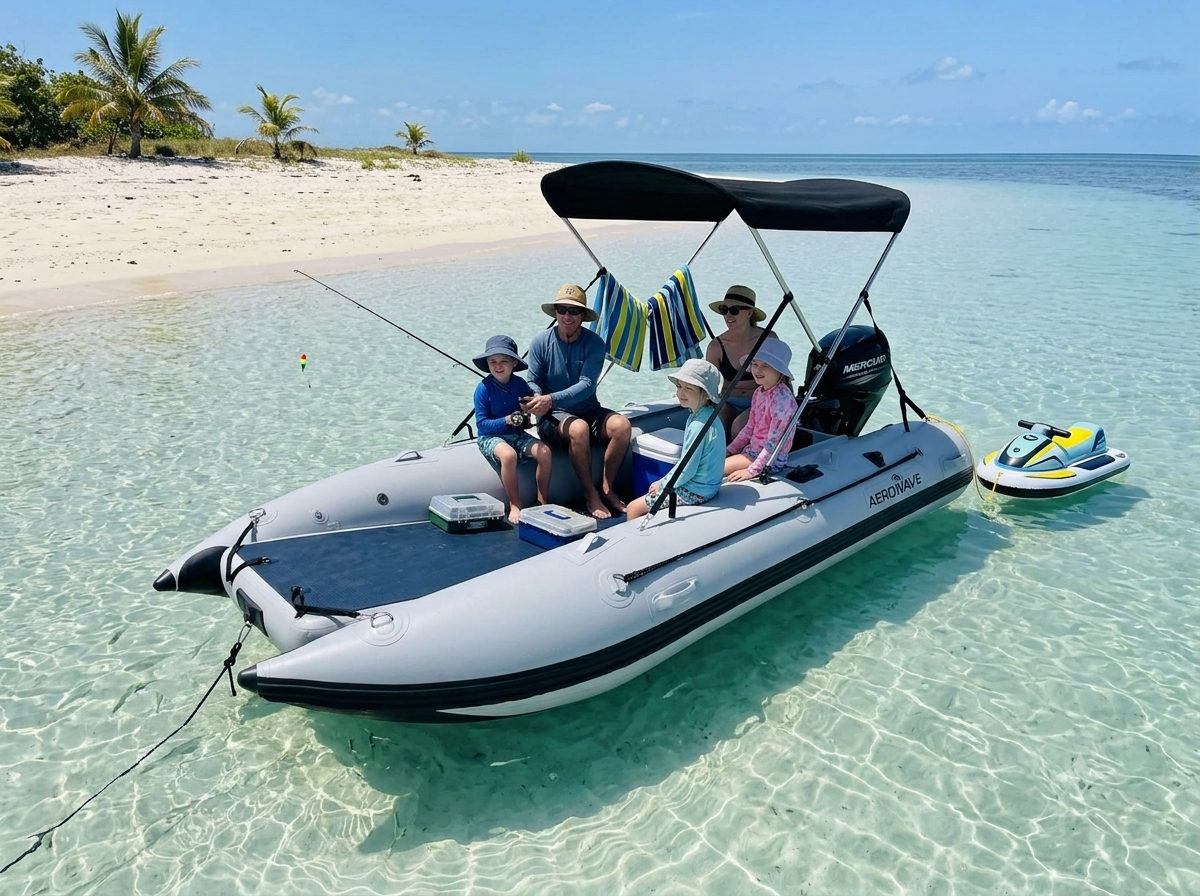
Aerowave WaveRunner 380 Series 3 Catamaran Package
The WaveRunner 380 Series 3 is a premium 3.8m inflatable catamaran package built for Australian and worldwide families, fishing, and coastal day boating — ideal for snorkeling and spearfishing — offering serious stability and premium German Valmex® construction.
Free freight to United States · local taxes payable on arrival
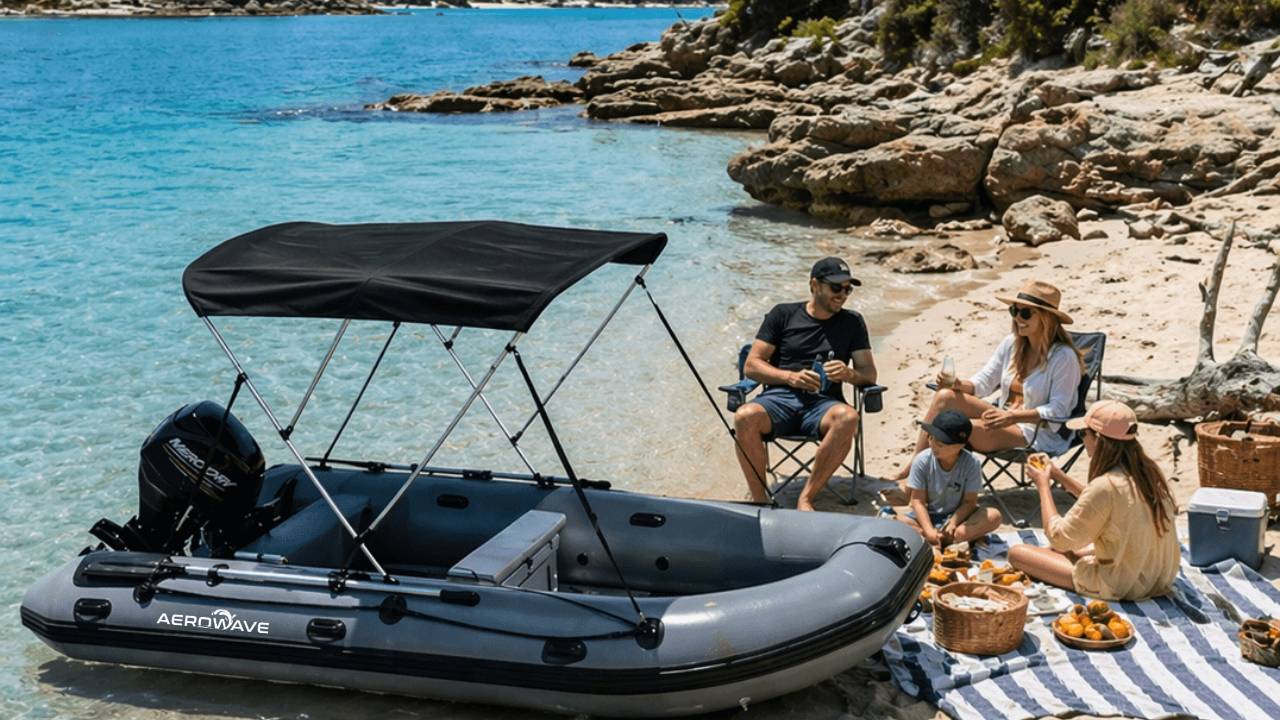
Aerowave Viper 400 Sovereign
Flagship 4m enclosed-bow inflatable catamaran. German VALMEX® 7321 Heavy Plus 1.2mm commercial-grade fabric, 10 PSI high-pressure drop-stitch air deck floor with VALMEX non-slip surface, LockPro wheels, full Bimini and FREE express delivery Australia-wide included. Winter special — save $1,000 until 31 August 2026.
Free freight to United States · local taxes payable on arrival
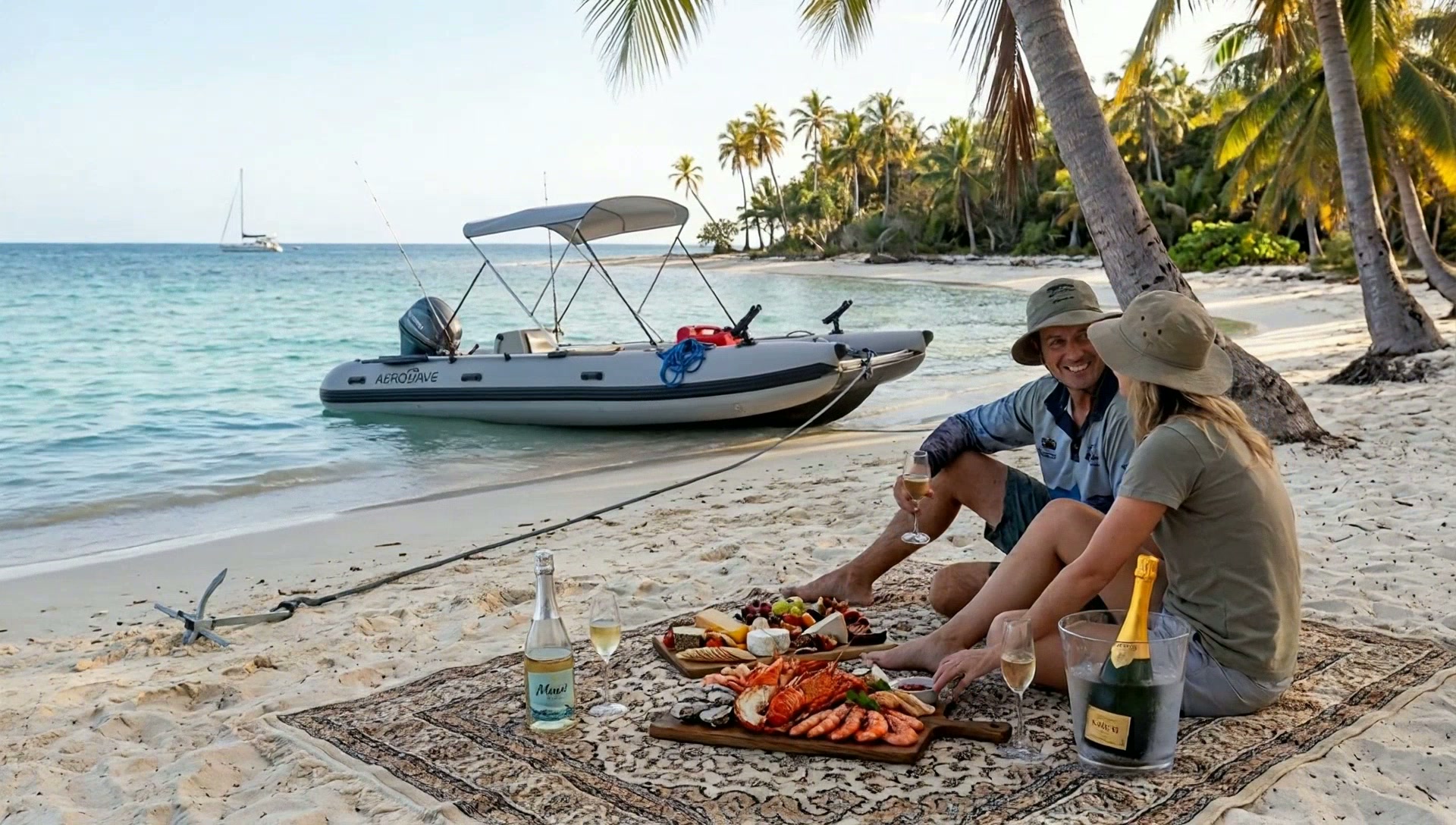
Aerowave Viper 365 Open Bow
Premium 3.65m Inflatable catamaran — built the same way as our flagship Viper 400 sports boat, just 35cm shorter. German VALMEX® 7321 Heavy Plus 1.2mm commercial-grade fabric, 10 PSI high-pressure drop-stitch air deck floor with VALMEX non-slip surface, LockPro wheels, full Bimini and FREE express delivery Australia-wide included.
Free freight to United States · local taxes payable on arrival
Not sure which suits you? Talk to a real boat owner.
Before you spend a cent
Buying from Australia, delivered to United States
You have never heard of us, we are on the other side of the world, and the internet is full of fakes. Fair enough. Here is everything you would need to check us out, in one place — no forms, no chat bot.
Australian designed business
Easy Inflatables, Avoca Beach NSW 2251. ABN 96 856 548 613. International orders ship from our Hong Kong hub.
222 owner reviews, 4.8 average
Read them in full, good and bad, on our reviews page.
CE certified, 7-year hull warranty
ISO 6185-3 and EU Directive 2013/53/EU. Warranty honoured worldwide.
Tracked, insured, door to door
FREE freight to United States · local tax/duty on arrival.
- Who am I actually buying from?
- Easy Inflatables, Avoca Beach NSW 2251, Australia. ABN 96 856 548 613. Sean is the owner and skipper, Gary Stewart handles sales on +61 2 4335 1603, Karen Matthews handles email. The boats are Australian designed; international orders ship from our Hong Kong dispatch hub so your landed price stays competitive. Phone us before you pay a cent — a real person answers.
- Is this really an Australian product?
- Yes — Australian designed and engineered on the NSW Central Coast. Manufacturing is done offshore to our spec, and international orders ship direct from our Hong Kong dispatch hub. If we routed every boat through Australia first, the freight alone would roughly double or triple your cost for the same hull.
- What do I pay, and what is not included?
- The delivery and import terms depend on your country. EU, UK, New Zealand and named Asia/Pacific lanes include duty and tax; US freight is free but US buyers pay import charges on arrival. Other destinations show their terms before payment.
- How do I pay safely?
- Card through Stripe (Visa, Mastercard, Amex, Apple Pay, Google Pay) or bank transfer. Card payments carry your bank's own dispute protection. We never ask for crypto, gift cards or payment to a personal account.
- What if it arrives damaged?
- Every boat ships fully tracked and insured door to door. Photograph the carton and the boat on arrival and email us — transit damage is claimed and replaced through us, not left with you and the courier.
- Is the warranty real outside Australia?
- Yes. The 7-year hull warranty on 1.2 mm VALMEX Heavy Plus and Orca Hypalon hulls applies wherever you are. Replacement parts are held in Australia and at our overseas hub and go out by express courier to your door.
- Is the boat actually certified?
- All Aerowave catamarans are CE certified to ISO 6185-3 and EU Directive 2013/53/EU. Certification paperwork is supplied with the boat — ask and we will send it before you order.
Ready to set sail?
Premium German-fabric inflatable catamarans, built to order and delivered to your door. Talk to our team or browse the fleet.
Like this guide? Get the next one in your inbox.
Owner-tested tips, gear deep-dives and Aussie boating know-how — no spam.