
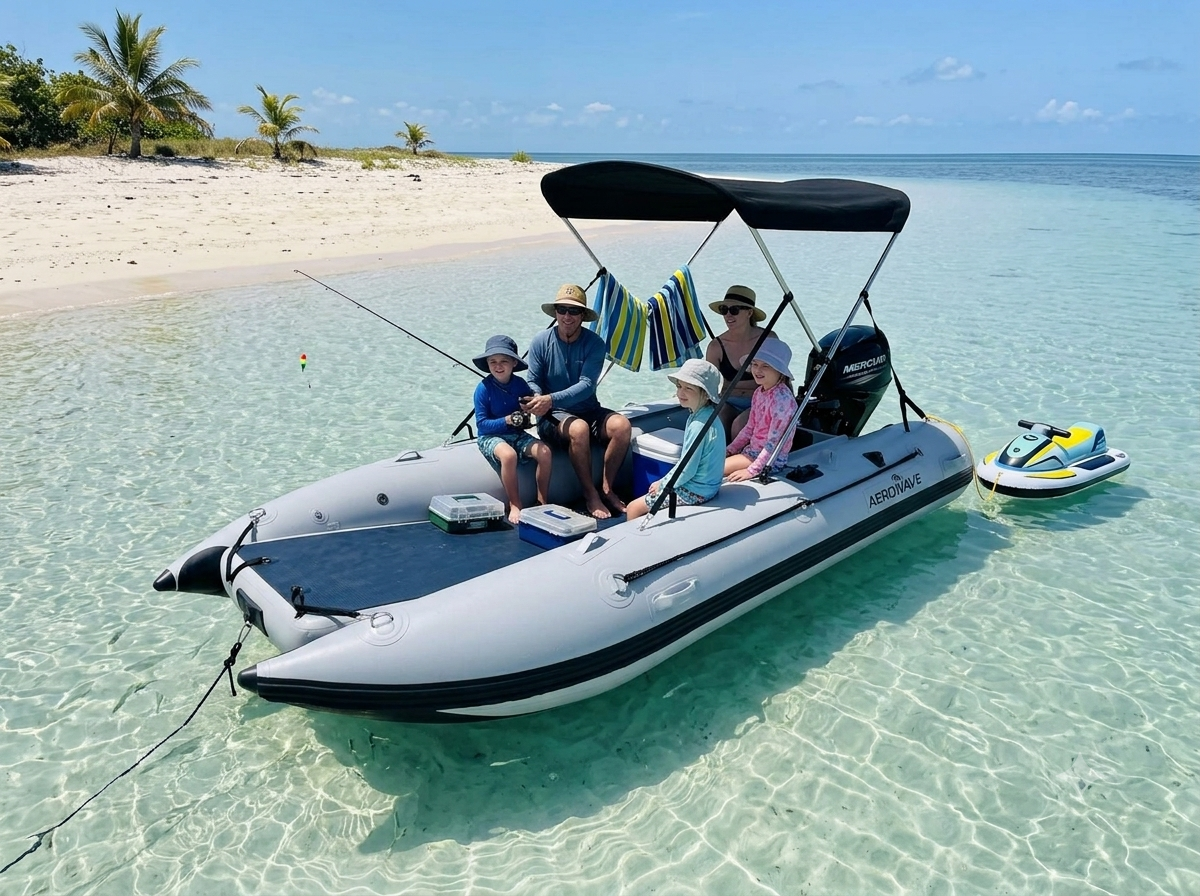
Rubber Boat With Engine: The Australian Monohull Inflatable Buyer's Guide (2026)
What Aussies actually mean when they search "rubber boat with engine" — how monohull inflatables and RIBs differ, what horsepower you need, what a fair 2026 price looks like, and how to avoid a boat that folds after two seasons.
Our recommendation
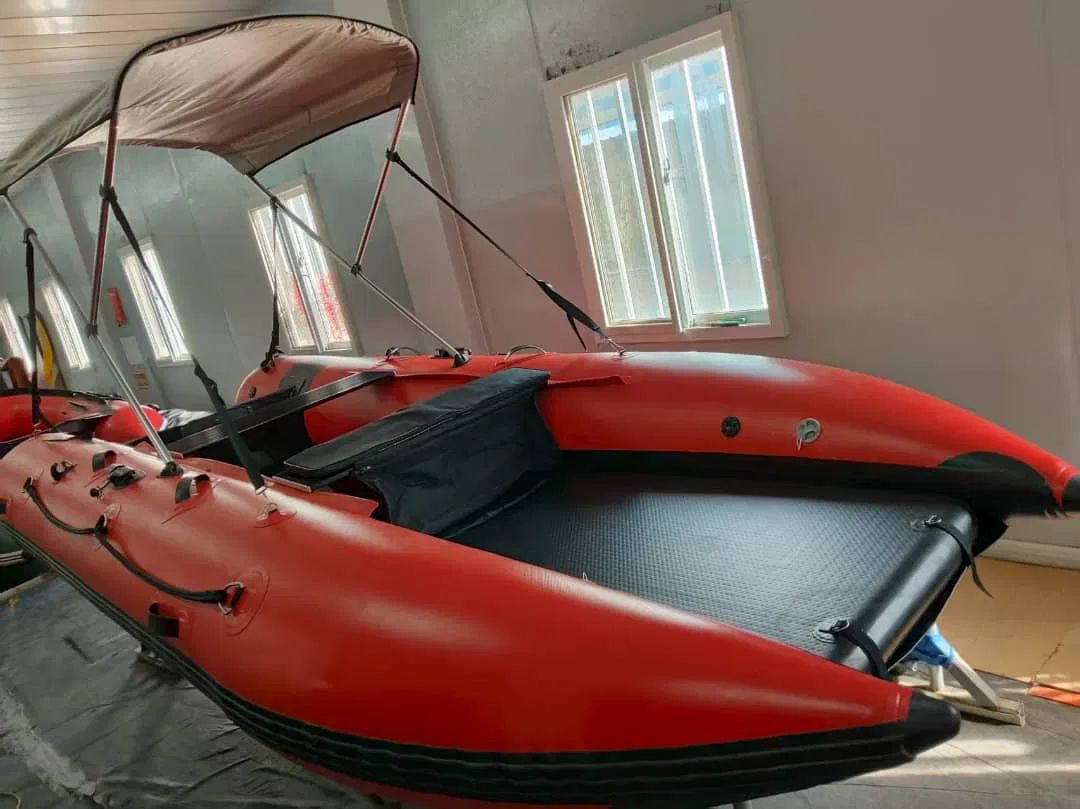
Aerowave WaveRunner 380 Series 3 Catamaran Package
Length
3.80m
Width
1.55m
Tube Diameter
52cm
Weight
47kg
If you have typed "rubber boat with engine", "blow up motor boats", "inflatable boat and motor" or "dinghy rubber boat" into Google, you are looking for the same thing: a monohull inflatable you can inflate, drop a motor on, and actually go somewhere in. This guide answers those searches in plain Australian terms — what the boat is, what engine it needs, what it should cost in 2026, and what separates a boat that lasts a decade from one that gives up in two summers.
What is a rubber boat with an engine?
"Rubber boat" is the everyday name for an inflatable boat. Almost none of them are actually rubber any more. A modern hull is a coated fabric — usually PVC-coated polyester, sometimes Hypalon (CSM) — and the coating is what determines whether it survives Australian UV, oyster racks and hot roof racks.
A monohull inflatable has two long side tubes joined by a bow cone and a floor, giving a single V or flat running surface. Fit an outboard to the transom and you have a motorised inflatable: light, packable, and capable of planing with surprisingly little horsepower.
Monohull, RIB or catamaran?
| Type | Hull | Best for | Trade-off |
|---|---|---|---|
| Soft-floor monohull | Air deck or slat floor | Tenders, estuaries, easy car transport | Softer ride in chop |
| RIB (rigid inflatable boat) | Fibreglass or alloy V-hull with tubes | Offshore, wind chop, high speed | Heavier, needs a trailer |
| Inflatable catamaran | Two hulls, open transom | Beach launching, shallow water, stability at rest | Different feel in a following sea |
If you searched "rigid inflatable boat" or "rib boat", you are in RIB territory — see our RIB vs inflatable catamaran comparison. If you want to fish standing up and launch off sand on your own, read the inflatable catamaran buyer's guide.
What engine does an inflatable boat need?
The number people search for most is horsepower, and the honest answer is: less than you think, as long as the hull is stiff.
Rough horsepower guide for a monohull
- 2.3 m – 2.7 m tender: 2.5–5 hp. Enough to move two adults and gear at displacement speed; 5 hp will plane one person.
- 2.9 m – 3.3 m: 6–9.9 hp. This is the sweet spot for a family tender or estuary boat that planes with two aboard.
- 3.5 m – 4.0 m: 15–20 hp. Two to four adults on the plane, comfortable in harbour chop.
- 4.3 m – 4.5 m: 20–40 hp, depending on the rated maximum on the builder's plate.
Never exceed the maximum horsepower on the boat's plate. It is a structural rating, not a suggestion.
Short shaft or long shaft?
Match the shaft to the transom height. Our current hulls use a 380 mm transom, which suits a short-shaft outboard and keeps more prop in the water — that is what kills the ventilation and cavitation people complain about when the prop breaks the surface in chop.
Petrol or electric?
Electric outboards have become genuinely usable for tenders and quiet estuary work. Petrol still wins for range, planing speed and refuelling on a long day. If you are weighing them up, our electric outboard guide covers the trade-offs.
How much should a motorised inflatable cost in Australia?
Three tiers dominate the 2026 market:
- Around A$3,000 or less — thin fabric, glued seams, imported generic hulls. Fine for flat water a few weekends a year.
- A$3,500 – A$6,500 — properly specified boats: heavy fabric, welded seams, real warranty, spare parts you can actually buy. This is where our Sprint RIBs, Swift Tenders and Viper monohull-style open bows sit.
- A$7,000+ — dealer-network pricing, usually the same class of boat with a showroom margin on top.
Add the motor on top. A boat-and-motor package usually lands better than buying separately, because the shaft length, transom and prop are matched before it ships.
The spec that actually decides how long it lasts
Two boats can look identical in photos and be a decade apart in life expectancy. Check these four things.
1. Fabric — always quoted as GSM and millimetres together
Ask for both numbers. A common import benchmark is 1100 decitex / 0.9 mm German VALMEX/PVC. Our premium hulls run 1500 GSM / 1.2 mm VALMEX Heavy Plus, and our AeroCat range uses 1100 decitex / 0.9 mm VALMEX. Premium VALMEX fabric lifespan is 10–12 years in Australian conditions. If a seller quotes "0.9 mm" with no GSM, you are missing half the spec.
2. Seams — welded, not glued
Hot-air welded seams fuse the coating. Glued seams rely on adhesive that heat and UV eventually beat. See welded vs glued seams.
3. Floor — air deck or aluminium
A high-pressure air deck is lighter and packs smaller; aluminium floorboards are stiffer under load and better if you stand and fish. Full comparison: air deck vs aluminium floor.
4. Valves, D-rings and transom reinforcement
Look for bonded reinforcement patches under every D-ring, a plywood or composite transom with a proper capping, and standard Halkey-Roberts style valves so replacements are easy to source.
Living with a motorised inflatable in Australia
- Registration and licensing vary by state — a powered inflatable generally needs both. Start with do you need a boat licence for an inflatable boat.
- Launching: wheels change everything if you launch off sand alone.
- Storage: deflate, dry, roll loosely. Storing it wet is the single fastest way to ruin a good hull.
- Setup time: 8–12 minutes with an electric pump for most hulls; see how quickly you can inflate and deflate.
Which Aerowave suits you?
- Yacht tender, dinghy replacement: Swift Tender 230/270/290 SI.
- Offshore and high-speed work: Sprint 330 or 350 RIB.
- Family estuary and fishing boat: Viper 430 or 450 open bow.
- Beach launching and shallow water: the AeroCat catamaran range.
Every boat page carries the finance calculator, landed pricing and the full inclusions list, so you can compare like for like without ringing around.
Frequently asked questions
- What is a rubber boat with an engine actually called?
- An inflatable boat, or a RIB if it has a rigid fibreglass or aluminium hull under the tubes. "Rubber boat" is the everyday name; the fabric is normally PVC-coated polyester or Hypalon, not rubber.
- What size engine do I need for an inflatable boat?
- As a guide: 2.5-5 hp for a 2.3-2.7 m tender, 6-9.9 hp for 2.9-3.3 m, 15-20 hp for 3.5-4.0 m, and 20-40 hp for 4.3-4.5 m. Never exceed the maximum horsepower stamped on the builder's plate.
- Can an inflatable boat plane with a small motor?
- Yes. A stiff hull with a high-pressure floor will plane with one or two people on as little as 5-9.9 hp. Hull stiffness and correct prop pitch matter more than raw horsepower.
- Short shaft or long shaft outboard for an inflatable?
- Match the shaft to the transom height. Our hulls use a 380 mm transom, which suits a short-shaft outboard and keeps more prop in the water, reducing ventilation and cavitation in chop.
- How much does an inflatable boat with a motor cost in Australia in 2026?
- Budget imports sit around A$3,000 or less, properly specified boats run roughly A$3,500-A$6,500, and dealer-network pricing usually starts around A$7,000. The outboard is additional unless you buy a matched boat-and-motor package.
- How long does an inflatable boat last?
- A premium VALMEX hull with welded seams lasts 10-12 years in Australian conditions when it is rinsed, dried and stored out of direct sun. Thin, glued-seam hulls often show seam and UV failure within a few seasons.
- Do I need a licence and registration for a motorised inflatable?
- In most Australian states a powered vessel needs registration and the driver needs a licence, with the thresholds set by each state. Check your state maritime authority before your first launch.
Finance this boat from $24/week
Estimate only — powered by Australian Motorcycle & Marine Finance (AMMF).
Paid upfront (AUD)
$545
10% of price
Term
5 years
60 monthly repayments
Comparison rate
9.95% p.a.
Subject to AMMF approval
Weekly
$24
Monthly
$104
Amount financed
$4,900
Indicative only. Actual repayments depend on your AMMF credit assessment, term, fees and the balloon you select. Talk to AMMF for a personalised quote on Aerowave WaveRunner 380 Series 3 Catamaran Package.
Like this guide? Get the next one in your inbox.
Owner-tested tips and Aussie boating know-how — no spam.
Ready when you are
Build your WaveRunner 380 Series 3 Catamaran Package in under 3 minutes.
1500 GSM / 1.2 mm VALMEX® hull. Five-year limited hull warranty. Free freight to United States · taxes included, nothing to pay on arrival.
delivered to your door
See it for yourself
Real boats. Real owners. Real people behind them.
Plenty of what you read online these days is generated. Check us out properly — the factory, the reviews and the owners are all one click away. Why we use AI, and how to check we’re real
How our boats are built
Walk the production line: thermo-welded seams, 1.2 mm VALMEX Heavy Plus hulls, over-pressure relief valves on every chamber.
See the buildGoogle Maps reviews
Real Australian owners, five stars, published on our Google Business Profile with the map — read them there, not just on our own site.
Open Google Maps reviewsOwner stories
Boats in use — offshore, on rivers, on rescue duty. Photos and words from the people who actually own them.
Read owner stories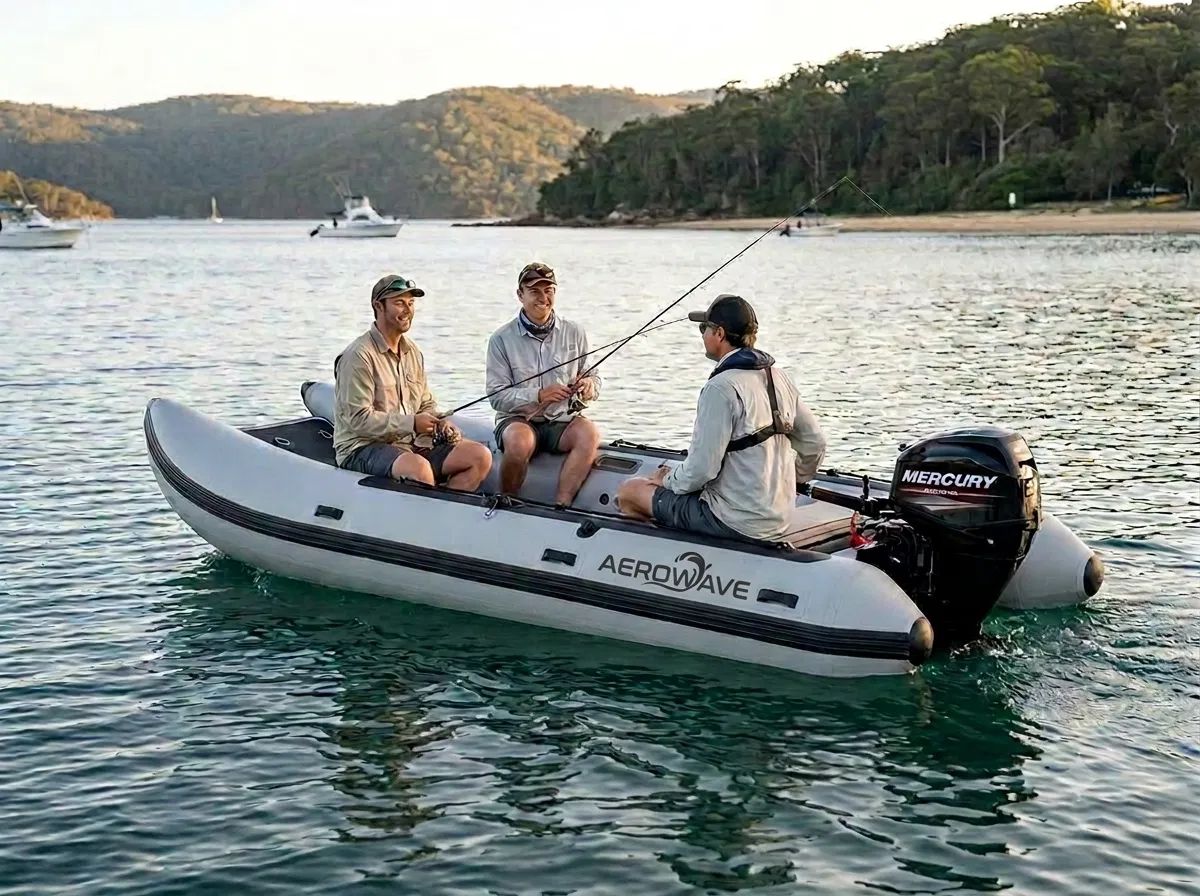
Aerowave WaveRunner 380 Series 3 Catamaran Package
US$4,149 USD · delivered to your door